
Chapter 01, the system
Your body runs a chemical factory you’ve never heard of.
Why digestion can feel heavier the cleaner you eat, and why the supplements you’ve tried never touched the cause.

Every day, without you thinking about it, your liver produces 17 to 34 fluid ounces (2 to 4 cups) of a yellow-green digestive fluid called bile.
Most people have never given bile a second thought. Nobody posts about bile on Instagram. But bile does more work than almost any other fluid in your body.
- It digests fat. Fat arrives in the small intestine as large, oily droplets. Bile acts as a biological detergent, breaking them into tiny particles that digestive enzymes can process. Without bile, much of that fat passes through undigested.
- It takes out the liver’s trash. Leftovers from the medications you take, used-up hormones like estrogen, excess cholesterol and many of the toxins your liver neutralizes all get packaged into bile and sent out. Bile is the garbage truck. If it stops moving, the waste stays inside.
- It carries your fat-soluble vitamins. Vitamins A, D, E and K, plus fats like omega-3s, all need bile to be absorbed. You could take the most expensive vitamin D supplement in the world. If your bile isn’t flowing, a significant portion of it passes straight through.
Your liver makes bile continuously and sends it to the gallbladder, a small, pear-shaped pouch tucked underneath the liver. The gallbladder stores it, concentrates it, and waits.
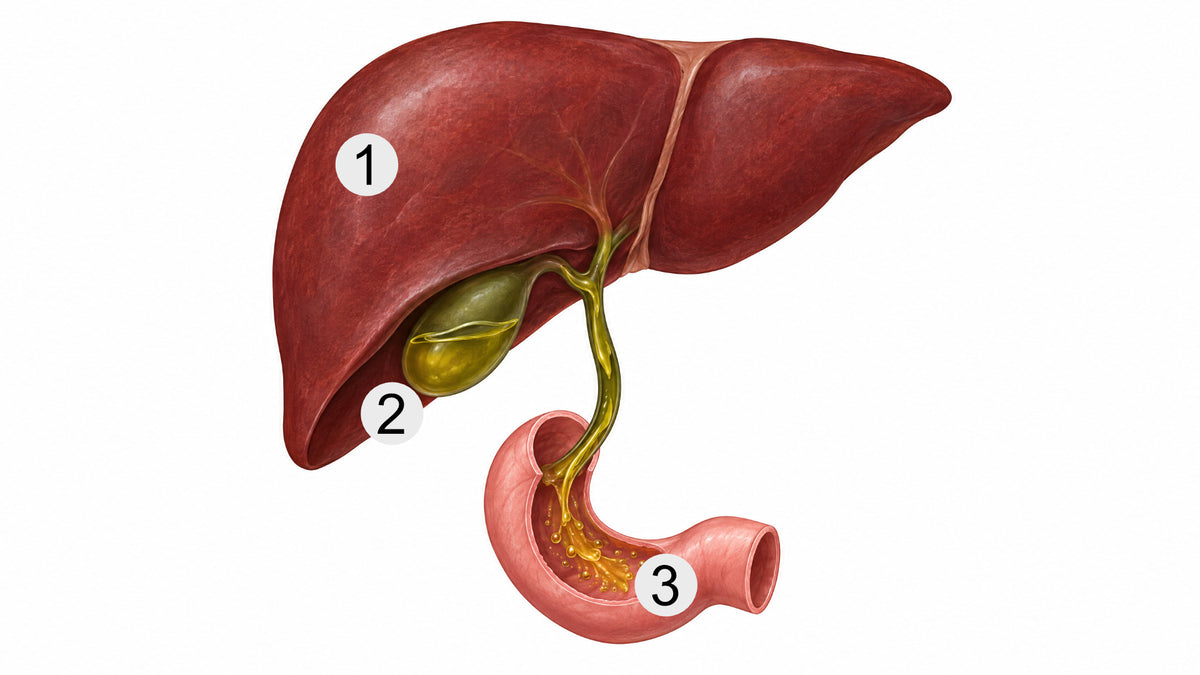
- 1 Liver Manufactures bile continuously.
- 2 Gallbladder Stores and concentrates bile.
- 3 Small intestine Bile emulsifies fat and absorbs nutrients.
Chapter 02, the signal
Your gallbladder doesn’t empty on a timer. It empties on a signal.
This is the part that changes everything. Once you understand it, the rest of the page will make complete sense. And you will wonder why nobody told you sooner.
Your gallbladder does not empty on a schedule. It does not release bile just because you ate a meal. It releases bile because of one specific hormonal signal.
When dietary fat arrives in your small intestine, cells in the intestinal wall release a hormone called cholecystokinin. Most people call it CCK. CCK travels through your bloodstream to the gallbladder and tells it to contract. Bile flows out and meets the fat that triggered the signal in the first place.
- Fat triggers CCK.
- CCK triggers contraction.
- Contraction releases bile.
- Bile digests fat.
That is the entire cycle. And it depends, above all, on one thing: fat in the meal.
Now think about what happens when the fat isn’t there.
- Skipping meals, or fasting 16:8. Hours without a signal. The gallbladder sits full and still.
- Very low-fat meals. The signal is weak. The gallbladder contracts partially, or not at all.
- GLP-1 medications like Ozempic or Wegovy. Less food, less often, with less fat. The signal fades. Gallbladder problems are listed in these drugs’ own prescribing information.
- Rapid weight loss on any plan. A calorie deficit, keto, bariatric surgery or strict clean eating. Cut the fat and you cut the signal.
This is why many bariatric surgery teams prescribe a bile acid called ursodiol for six months after surgery.
But nobody tells the woman doing 16:8 from an Instagram reel. Nobody tells the man on Ozempic who’s cut his portions in half. Nobody tells the person who lost 30 pounds eating clean and can’t figure out why their digestion feels heavier now than when they ate worse.
When the gallbladder stops emptying, the fluid inside it begins to change.
Fig. 02a · Illustration · Signal ON
Gallbladder contracted
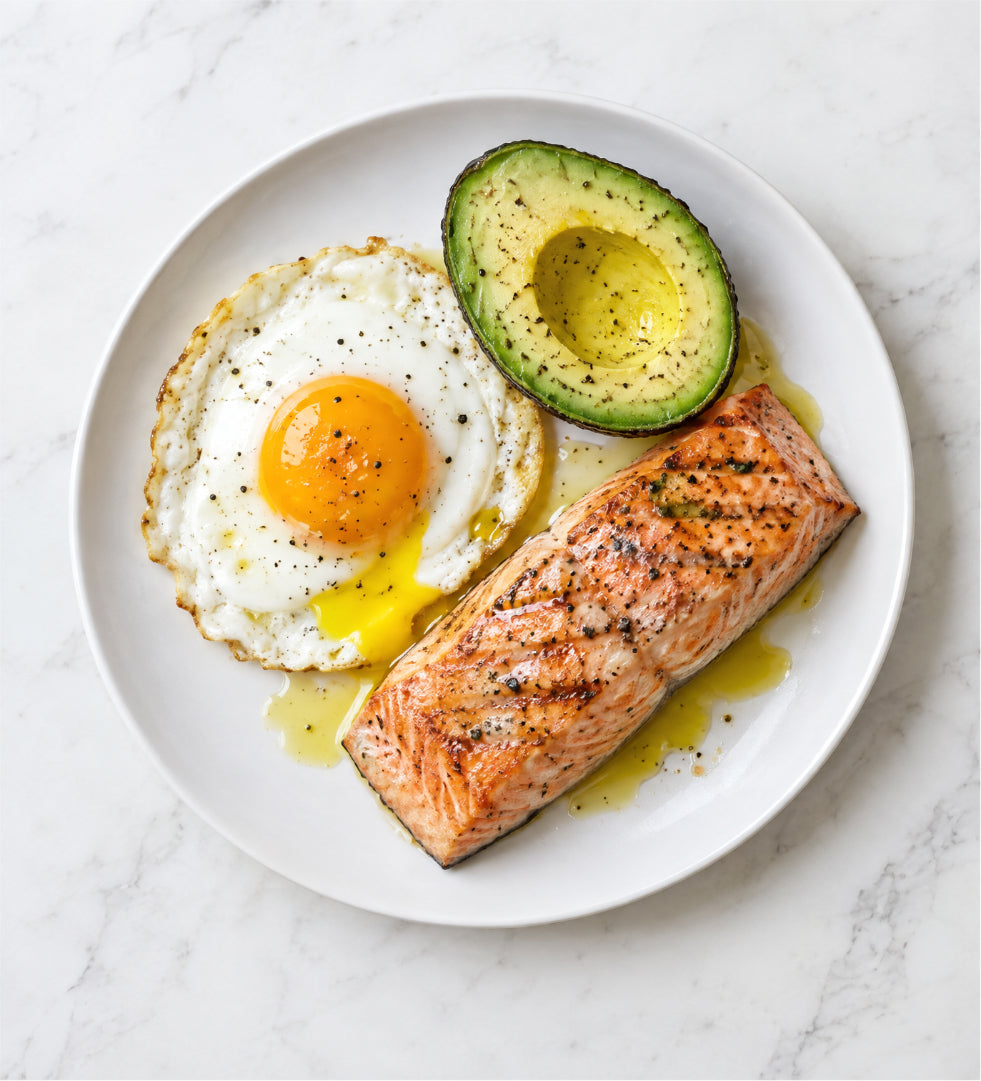
Fig. 2a · A meal with fat.
Small, squeezed gallbladder. Arrow of bile flowing out through the duct into the intestine. Plate icon above with fat-containing food (egg or salmon). “CCK” hormone molecule travelling from intestine up to gallbladder along a dotted arrow. Green tint / green border = working correctly.
Fat in the meal → CCK released → gallbladder contracts → bile flows
Fig. 02b · Illustration · Signal OFF
Gallbladder full and still
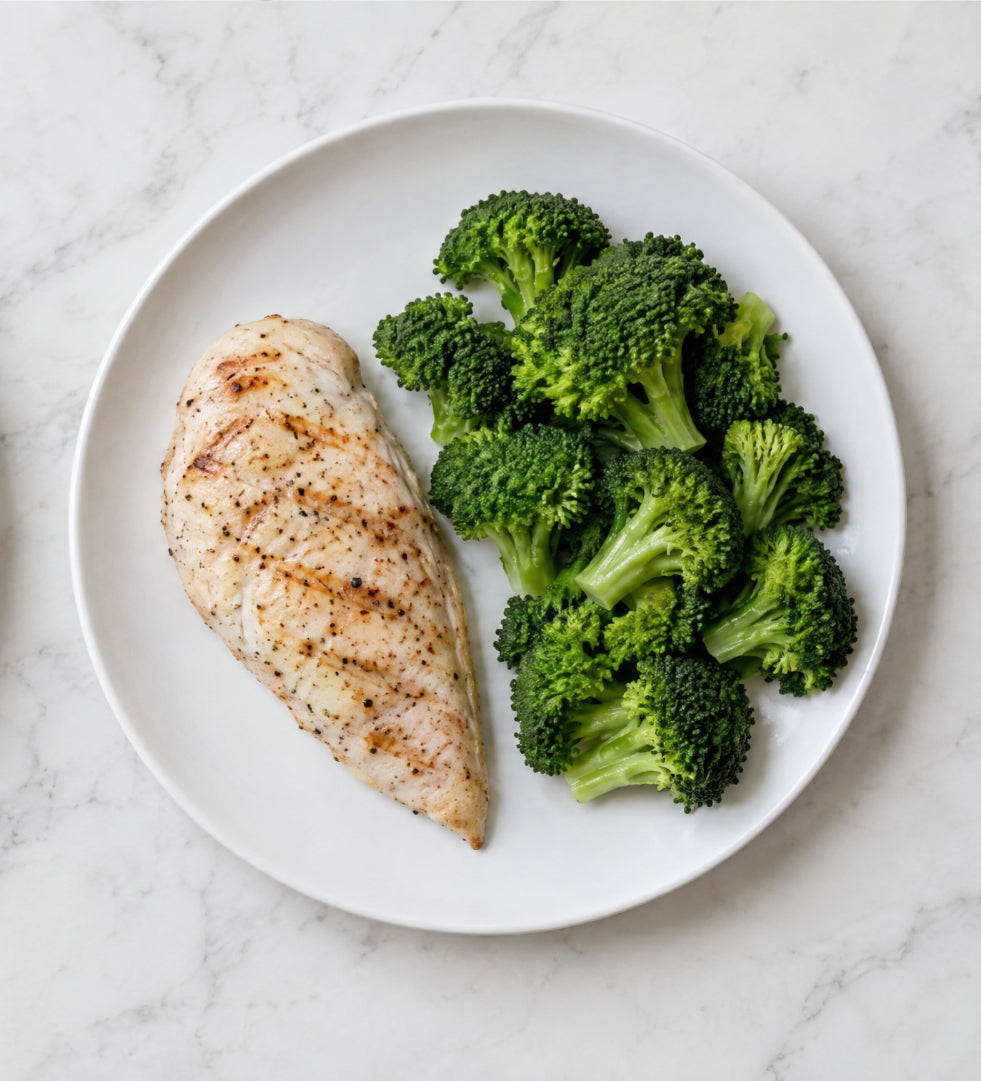
Fig. 2b · A meal without fat.
Same shape, swollen and distended. No outflow arrow. Bile darker and denser. Plate with plain food (dry chicken breast, steamed broccoli). No CCK molecule, dotted path broken. Small clock icon reading “16h”. Muted grey / amber tint = stalled.
No fat (or very little) → no CCK → gallbladder sits still → bile concentrates
Chapter 03, what goes wrong
What happens inside a gallbladder that stops emptying.
Bile is a mix of water, bile salts, cholesterol and a few other fats. When it is flowing, these stay dissolved and balanced. The fluid is thin, mobile and functional.
When bile sits, it changes.
The gallbladder keeps absorbing water, so the bile gets progressively more concentrated. Past a certain point, bile salts can no longer hold all the cholesterol in solution. It precipitates out, first as invisible micro-crystals, then as a thickened material that shows up on an ultrasound.
Doctors call it biliary sludge.
Sludge is not a disease. It is a stage. If the conditions that caused it continue, cholesterol crystals can aggregate and harden into solid gallstones.
And here is the part that makes this worse during weight loss. As you lose body fat, your liver pushes extra cholesterol into your bile. More cholesterol going in. Less bile flowing out. This is the well-documented mechanism behind gallstones during rapid weight loss. The same forces are at work, more quietly, in anyone who cuts fat while losing weight.
Fig. 03 · Illustration to source · full width
The Concentration Timeline
Four gallbladders left to right, joined by a subtle line. Same clean line art as Fig. 1. Charcoal lines, green → amber fills. No shading. Educational, not alarming.
-
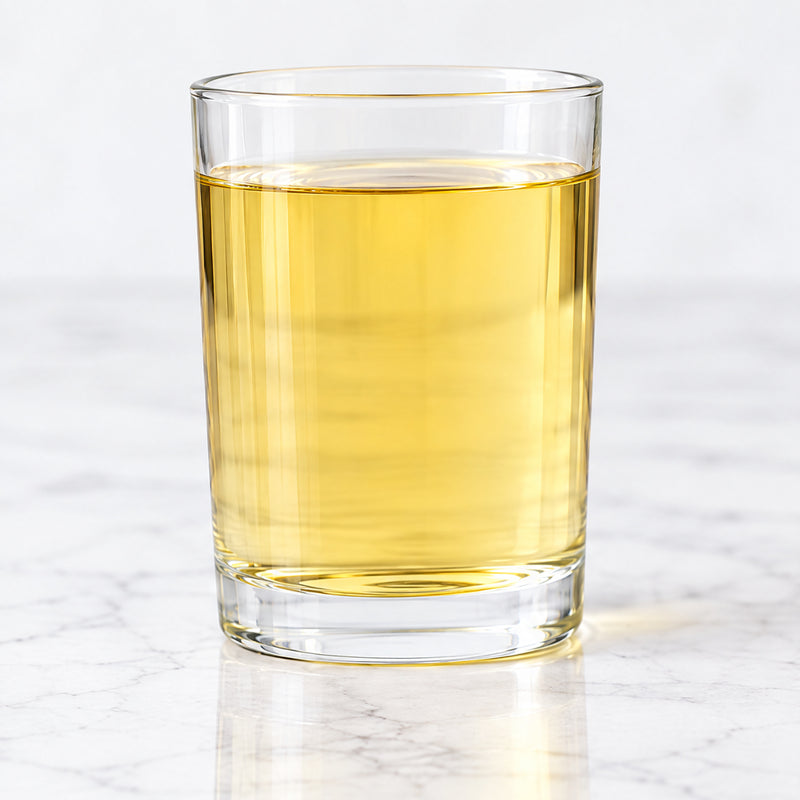
Thin, light yellow-green fluid, arrows in and out
Stage 1
Fig. 3a · Flowing bile.
Flowing
Bile flowing normally. Gallbladder contracting and emptying regularly.
-
Stage 1 → 2 · This transition happens when fat intake drops, fasting extends, or hormonal changes slow motility.
-
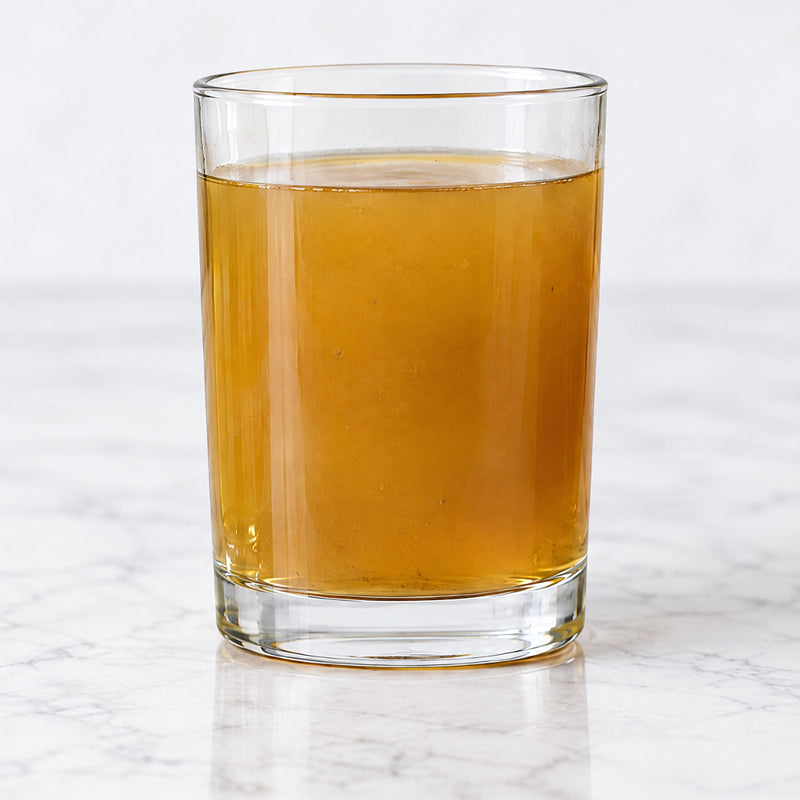
Slightly larger, darker amber, small dots appearing
Stage 2
Fig. 3b · Concentrating.
Concentrating
CCK signal reduced. Gallbladder sitting longer. Water reabsorbed. Cholesterol concentrating.
-
Stage 2 → 3 · During rapid weight loss, the liver pushes extra cholesterol into already-stagnant bile, accelerating this stage.
-
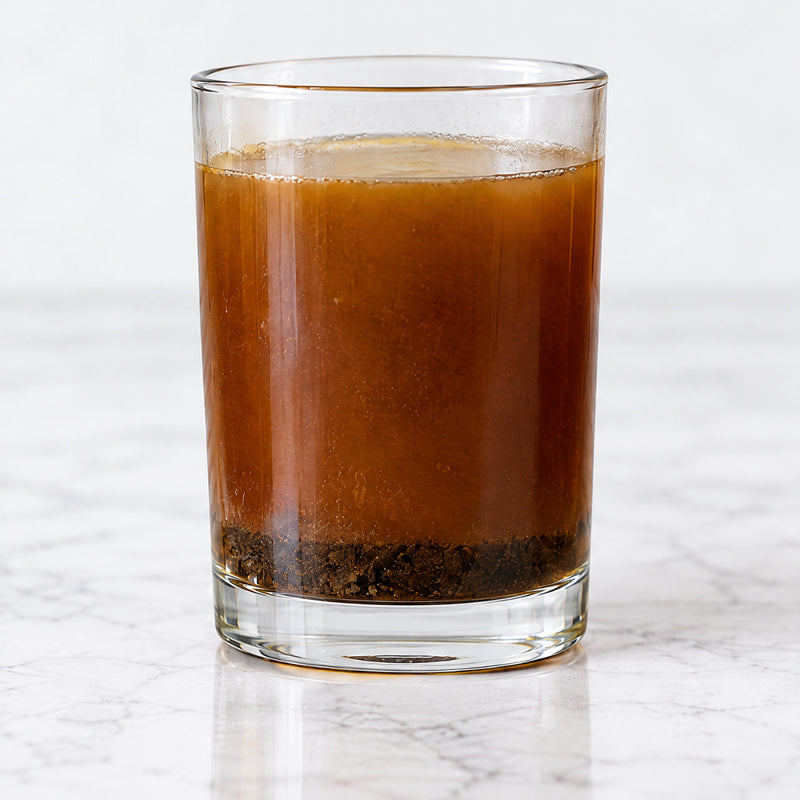
Distended, thick cloudy fluid, dense layer settled at bottom
Stage 3
Fig. 3c · Sludge.
Sludge
Biliary sludge. Cholesterol has precipitated. Thick, viscous fluid on ultrasound.
-
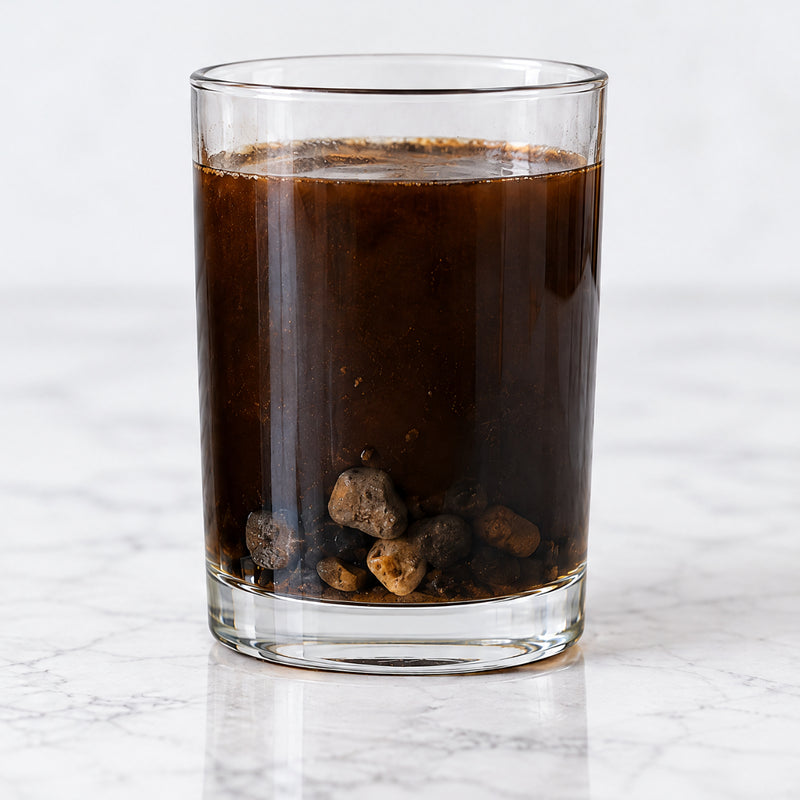
Full, tense walls, irregular solid stones in dark fluid
Stage 4
Fig. 3d · Stones.
Stones
Gallstones. Solid cholesterol crystals. May require surgery if they cause acute blockage.
And many people report that the pressure gets worse, not better, as their diet gets cleaner. This is the paradox nobody explains: cutting out fat removes the signal. The gallbladder stops emptying. The bile concentrates further. The pressure increases.
They are doing everything right. And everything right is making it worse.
The good news: sludge is a stage, not a sentence. In many people it clears once bile starts moving again.
Chapter 04, who it affects
This isn’t rare. It’s just rarely explained.
Gallbladder disease is one of the most common surgical conditions in the developed world. In the United States alone, more than 900,000 gallbladders are removed every year, and more than 20 million people have gallbladder disease visible on ultrasound.1
But most people who develop bile flow problems are never given a mechanical explanation of why it happened. They are told to eat less fat. They are told to wait. They are told that if it gets bad enough, the gallbladder can be removed.
The people most affected are not who most people expect.
Women, 2–3x more likely
Estrogen increases bile cholesterol. Progesterone slows gallbladder contractions. More cholesterol going in, less bile flowing out. Hormone therapy in menopause adds to it.
Pregnant and postpartum
Peak hormones during pregnancy, dramatic shifts after birth.
“I’ve been pregnant three times and nobody told me this was a risk.”
Hormonal birth control
Synthetic estrogen alters bile composition. The risk is printed in every box, buried after the blood clot warning. Almost nobody reads it.
Rapid weight loss
Intermittent fasting, keto, GLP-1s, bariatric surgery. Less fat eaten means less signal, and the faster the loss, the more cholesterol goes into stagnant bile.
“I lost 25 pounds on Ozempic. Now a normal dinner sits in me like a brick for hours.”
-
Over 40
Bile production and gallbladder motility both decline naturally with age.
Long-term PPIs or fibrates
PPIs blunt the trigger for bile release. Fibrates, a cholesterol drug, push more cholesterol into bile.
No gallbladder
No reservoir. Bile drips continuously: weak when you need it, present when you don’t. “You’ll be fine, eat whatever you like” becomes a source of lasting frustration.
“They told me I’d be fine without it. Three years later, I still plan every meal around it.”
If you fit any one of these categories, your bile flow may already be compromised. Most people fit two or three.
Count yours. Then find out which bile flow pattern you’re in.Find your pattern.
Chapter 05, the usual fixes
The supplement shelf, explained.
Most people who experience these symptoms do the responsible thing. They go online or to a health store and buy something that says “liver support” or “digestive health” on the label.
They take it for weeks. Sometimes months. The pressure doesn’t change. The bloating doesn’t change. They try something else, and something else after that. Eventually, they have a shelf of half-used bottles and no answers.
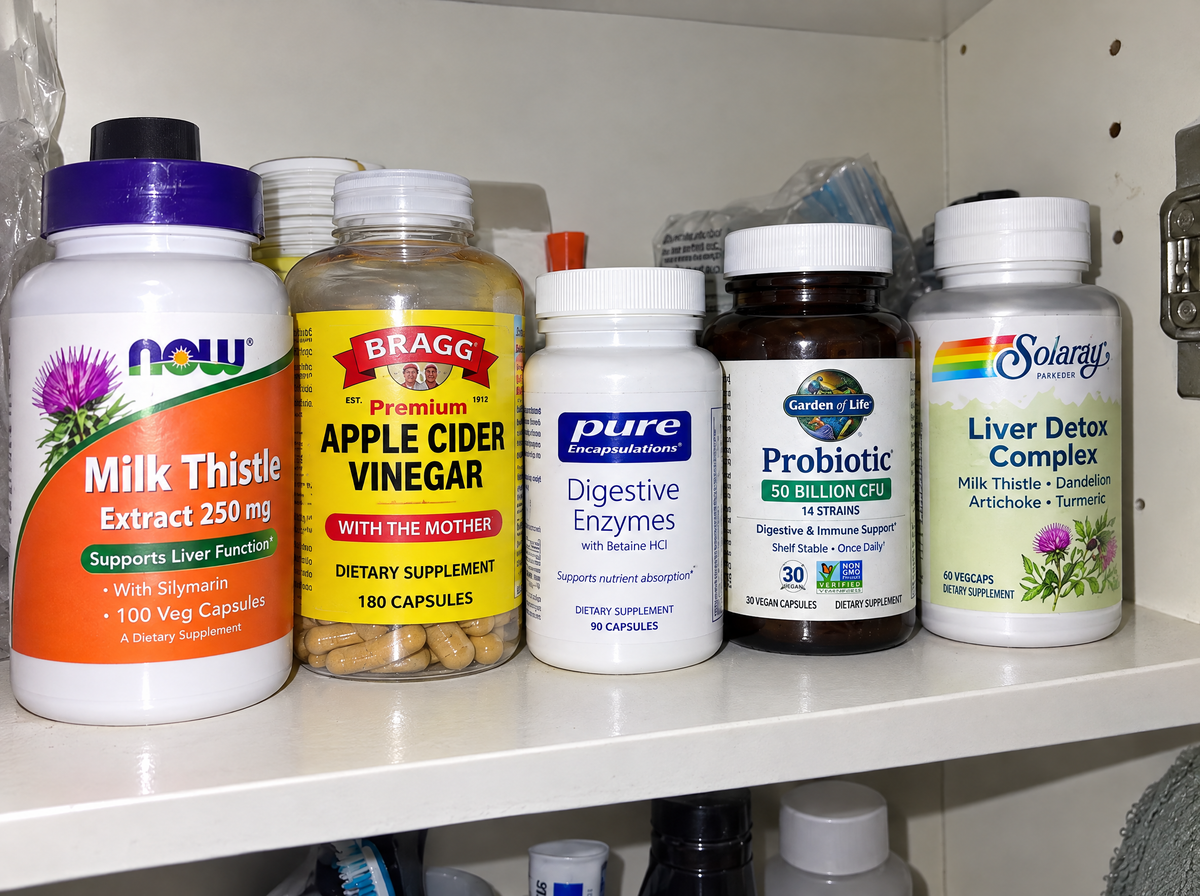
This is not because the products are bad. It is because they are working on the wrong part of the system.
-
Milk thistle
Doesn’t thin bileDoes: protects liver cells from oxidative damage.
Misses: protects the container, not what’s inside it. Like polishing the outside of a clogged pipe.
-
Apple cider vinegar
Doesn’t thin bileDoes: may support stomach acid levels.
Misses: never reaches the liver or gallbladder. It is working in a different building.
-
Digestive enzymes
Doesn’t thin bileDoes: break down food in the small intestine.
Misses: lipase needs bile to emulsify fat first. It is working on the step after the bottleneck.
-
Probiotics
Doesn’t thin bileDoes: support the gut microbiome in the colon.
Misses: several feet downstream of the gallbladder. Right system, wrong neighborhood.
-
NAC
Doesn’t thin bileDoes: rebuilds glutathione, the liver’s master antioxidant.
Misses: oxidative protection and bile flow are separate systems. NAC handles one, not the other.
-
Artichoke, dandelion and bitters
Doesn’t thin bileDoes: prompt the liver to produce more bile.
Misses: more of the same bile. Nothing changes in what it’s made of.
-
Ox bile salts
Doesn’t thin bileDoes: adds bile acids to digestion.
Misses: mostly the harsher, water-repelling kind that cause trouble when bile concentrates, and it can irritate the stomach. Like pouring more oil into a blocked drain.
-
Water
Doesn’t thin bileDoes: essential for general health.
Misses: bile is already about 95% water. What decides whether it stays liquid is the balance of cholesterol to bile acids, and drinking more doesn’t touch that.
The problem is the bile itself. And for that to change, you need the right compound.
Chapter 06, the mechanism
What a hibernating bear knows about bile that nobody told you.

Every winter, a black bear stops eating for four to seven months. No meals. No fat. No CCK signal. From what you now know about the signal, its gallbladder should sit full and still all winter.
It does. And while it sleeps, living off its own fat, its blood cholesterol climbs to more than double a healthy human’s. By the same logic, it should wake up full of sludge and stones.
It doesn’t. Researchers who examine wild bears find no cholesterol gallstones.4
The difference is what its bile is made of. Up to a quarter of a black bear’s bile acids are one compound: ursodeoxycholic acid. Urso is Latin for bear. Most of it is attached to the amino acid taurine, and that taurine-attached form has a name: TUDCA. In winter, when the bear needs it most, its share goes up.3,5
In human bile, the same compound is only a trace. But it can be raised. In one study, people taking 500mg a day of its close relative for three months shifted their bile to about 22% of the total.5 Bear-like bile, in twelve weeks.
Honey crystallizes when it holds more sugar than the liquid can keep dissolved. Bile does the same with cholesterol. Hydrophilic bile acids give it more room to keep cholesterol dissolved.
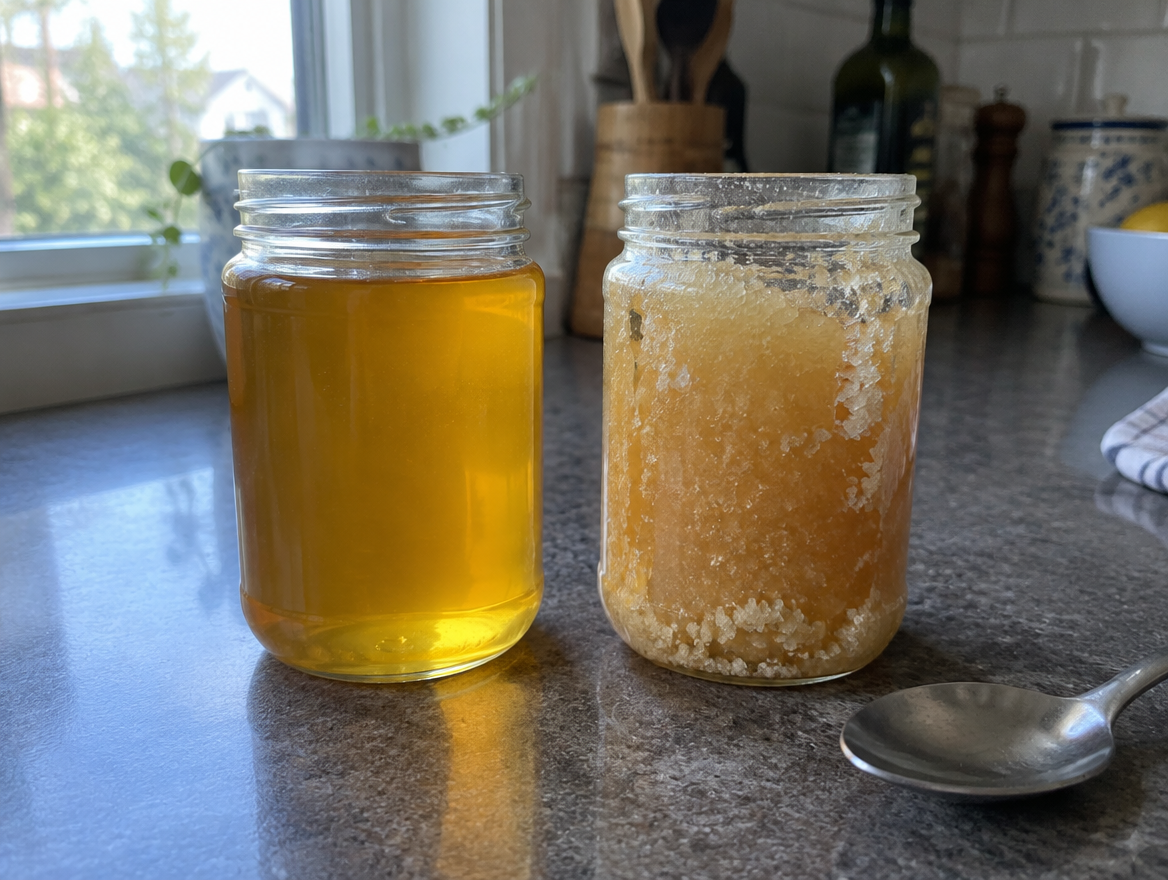
What TUDCA actually does
-
It lowers the cholesterol load in your bile.
Bile turns to sludge when it carries more cholesterol than its bile acids can hold in solution. Hydrophilic bile acids shift that ratio. In clinical studies of this bile acid family, the cholesterol content of bile fell by 40–60%, largely because the liver sends less cholesterol into it.6 Less cholesterol in every drop means less to crystallize when bile sits through a long fast.
-
It helps your liver push bile out.
Inside every liver cell, bile is pumped into tiny channels by transport proteins. Think of them as the pumps at the top of the pipe. TUDCA signals the cell to move more of these pumps to the surface where they work.7 More pumps working means more bile leaving the liver. This happens upstream of the gallbladder, which is why TUDCA still works for people who no longer have one.
-
It shields the cells bile touches.
The harsh, water-repelling bile acids that build up in stagnant bile act like detergent on cell walls. TUDCA dilutes and displaces them in the bile pool, and it helps stressed liver cells keep working. Researchers call it a “chemical chaperone” for this reason.8
Why TUDCA, not UDCA?
When a doctor prescribes ursodiol (UDCA), your liver has to attach it to taurine or glycine before it can send it into bile. TUDCA arrives already attached. It is the form the bear makes, and a form your liver secretes. It’s also more water-soluble, and it is available without a prescription.
“So why not just ask my doctor for ursodiol?”
If you’ve been diagnosed with gallstones, you should talk to your doctor, and ursodiol may be part of that conversation. It’s a prescription drug for diagnosed disease. Surgical teams give it after bariatric surgery because the evidence is strong: across 12 randomized trials, those who took it developed about 87% fewer gallstones.2 TUDCA is how you support the same pathway day to day, before anyone has written a diagnosis.
The bariatric patient gets a bile acid on discharge. The bear makes its own. The woman doing 16:8 gets told to eat less fat.
Chapter 07, the product
The compound works. The question is whether your capsule contains it.
By now you know what TUDCA does. Here’s what most people only find out after a bottle that didn’t work: pure TUDCA is costly to produce, and nothing stops a brand from cutting it.
When we had TUDCA products tested at Eurofins, one of the world’s largest independent laboratories, the other brands averaged 42.1% purity. Ours came back at 99.6%.9
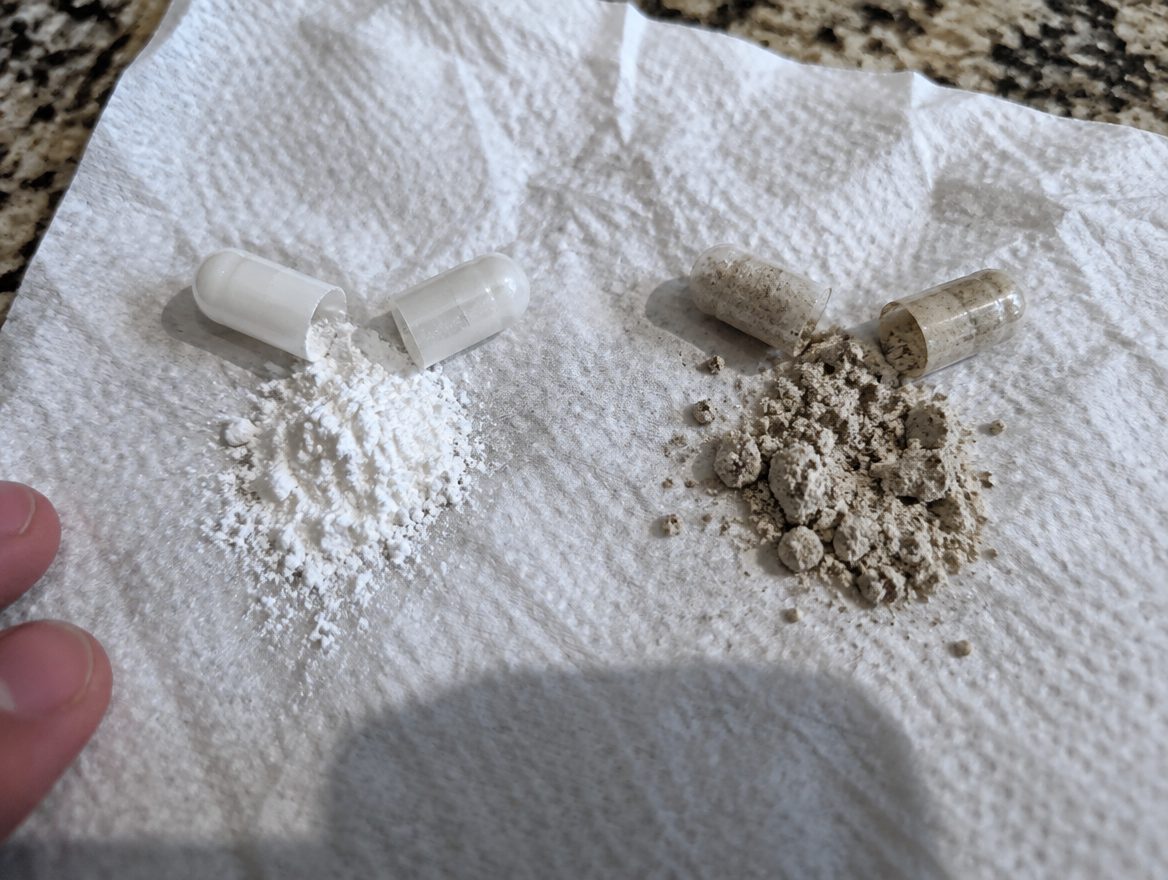
TUDCA purity, Eurofins lab test. Read our lab report
That’s why so many labels tell you to take 1,500mg a day. If less than half the powder is TUDCA, you need three times as much to get close.
Five things to look for
Purity, with a named lab.
Not “lab tested”. A percentage, and who tested it.
Dr. Primal: 99.6%, tested by Eurofins, report published.
The real milligrams of TUDCA per day.
Not a “complex” or a blend weight.
Dr. Primal: 500mg of tauroursodeoxycholic acid in two capsules. Nothing else active.
Nothing added for the factory.
Flow agents like magnesium stearate and silicon dioxide help powder run through machines faster. They do nothing for you.
Dr. Primal: TUDCA. That’s the whole label.
A capsule built for where TUDCA works.
Bile acids belong in your intestine, not your stomach. It’s the same reason ox bile gives so many people heartburn.
Dr. Primal: Gut Deliver™ capsules are designed to stay closed through stomach acid and open further along, closer to where TUDCA is absorbed.
A source you’re comfortable with.
Ask where it comes from.
Dr. Primal TUDCA contains no bear bile. Same molecule as the bear’s, made without harming one.
| Feature |  Dr. Primal TUDCA | Typical TUDCA bottle |
|---|---|---|
| Purity (Eurofins) | 99.6% | 42.1% average in our test |
| Daily dose | 500mg, 2 capsules | Often 1,500mg suggested to compensate |
| Other ingredients | Rice flour | Flow agents, fillers |
| Capsule | Gut Deliver™ enteric | Standard, opens in the stomach |
| Batch report | Published, Eurofins | “Available on request” or none |
4.8 out of 5 from 1,051 reviews
“This didn’t cause stomach irritation or heartburn, unlike the cheaper Amazon alternatives.”
“Had gallbladder removal surgery in 2023. Haven’t been able to eat a steak dinner without upset stomach. Now on my 4th month… No more pain.”
“Tried enzymes, ox-bile, milk thistle, etc… my digestion was back on track in two weeks.”
The protocol
Two capsules a day, with a meal that contains some fat. The fat sends the CCK signal you read about earlier. The TUDCA changes the bile that answers it.
Weeks 1–2
Many people notice meals sitting lighter.
Weeks 2–4
Fatty food stops feeling like a decision.
Week 8 onward
The change holds. Biology varies; some sooner, some later.
The bear-like shift in bile you read about was measured at three months. That’s why we suggest giving it at least that long, and why our best price is on the longer plans.
If you now understand how bile works, what causes it to stagnate, why the things you’ve tried haven’t addressed it, and what a hydrophilic bile acid actually does, then you have enough information to decide whether supporting your bile flow directly is something worth trying.
This is not a replacement for medical advice. If you are in pain, see your doctor. If you have been diagnosed with gallstones, follow your medical team’s guidance. If you are scheduled for surgery, do not cancel it based on a supplement.
Chapter 08, what to do next
Where to go from here.
Find out which bile flow pattern you’re in, and what to do about it. The quiz maps your symptoms, history and lifestyle to a personal profile in about 90 seconds.
Questions we get asked most
How long before I notice a difference?
Many people notice meals sitting lighter within 10 to 14 days. Some sooner, some later. The shift in bile measured in research took around three months, which is why we suggest giving it at least that long.
Can I take TUDCA if I don’t have a gallbladder?
Yes. TUDCA works in the liver, upstream of where the gallbladder used to be. People without a gallbladder are among our most common customers, because without a reservoir, what bile is made of matters more.
I’m on a GLP-1, or I fast. When do I take it?
With your first meal of the day that contains some fat. That meal sends the CCK signal; TUDCA changes the bile that answers it.
Can I take it alongside my current medication?
Bile acid binders (such as cholestyramine) and aluminum-based antacids can reduce absorption of bile acids, so take TUDCA at least 2 hours apart from them. If you take any prescription medication, check with your doctor or pharmacist before starting.
Is it safe during pregnancy?
TUDCA is not suitable during pregnancy or breastfeeding, or for anyone under 18.
Are there side effects?
TUDCA is generally well tolerated. The most commonly reported effect with bile acids is looser stools; taking it with food helps. If anything feels wrong, stop and speak to your doctor.
Is it made from bears?
No. It’s the same molecule bears make, produced without any bears involved.
Why is yours more expensive than the TUDCA on Amazon?
Per capsule, it can be. Per milligram of actual TUDCA, it usually isn’t. In our Eurofins test, other brands averaged 42.1% purity. If less than half the powder is TUDCA, the cheaper bottle is the more expensive one.
What is the difference between TUDCA and UDCA?
UDCA (ursodeoxycholic acid) is the prescription bile acid. Your liver has to attach it to taurine or glycine before sending it into bile. TUDCA arrives already attached to taurine, the form your liver secretes, and it’s available as a supplement. They are the same biochemical family.
Why is TUDCA better than ox bile salts?
Ox bile adds more of the harsher bile acids, the type that cause trouble when bile concentrates, and it often irritates the stomach. TUDCA is a hydrophilic bile acid that changes what your bile is made of. Our Gut Deliver™ capsule is also designed to open past the stomach.
What does “hydrophilic” mean?
Water-attracting. Most bile acids are hydrophobic, or water-repelling. Hydrophilic bile acids like TUDCA are gentler on cells and help bile hold cholesterol in solution.
Why don’t doctors recommend it?
Doctors prescribe its close relative, ursodiol, for diagnosed conditions. Supplements aren’t usually part of that toolkit, though some practitioners do recommend TUDCA, and awareness is growing.
P.S. The bear goes months without a meal and wakes up with clean bile. You don’t need to hibernate. You need the same bile acid, in a capsule that actually contains it.
Sources
- Unalp-Arida and Ruhl, Burden of gallstone disease in the United States population, World J Gastrointest Surg
- Al-huniti et al., UDCA prophylaxis after bariatric surgery: meta-analysis of 12 RCTs, Cureus 2023
- Plasma levels of ursodeoxycholic acid in black bears: seasonal changes
- North American Bear Center, hibernation study notes
- Ursodeoxycholic acid in the bile of black bears and of patients taking 500–750mg daily
- Lazaridis et al., Ursodeoxycholic acid: mechanisms of action and clinical use, J Hepatol 2001
- Sommerfeld et al., Mechanisms of tauroursodeoxycholate-mediated inhibition of apoptosis, Eur J Med Res 2014
- Kusaczuk, Tauroursodeoxycholate: bile acid with chaperoning activity, Cells 2019
- Dr. Primal TUDCA, Eurofins analytical report